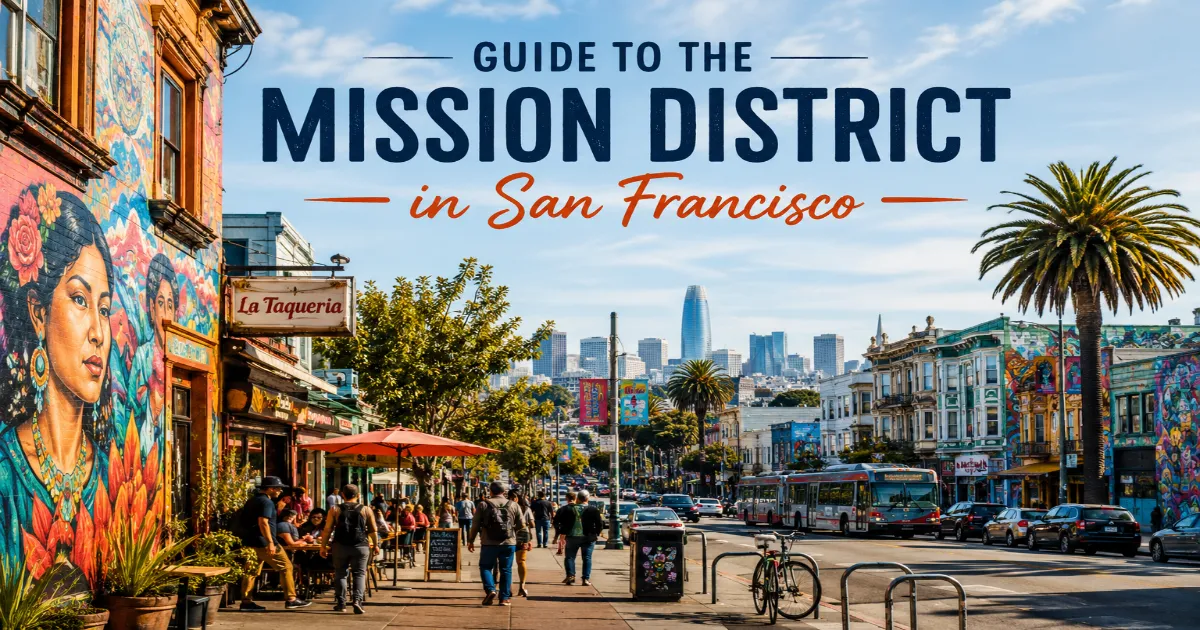
The Mission District in San Francisco is one of the city’s most colorful and lively neighborhoods. It brings together history, street art, local food, independent shops, parks, nightlife, and a strong sense of community.
For visitors, the area offers much more than a quick stop for a famous burrito. A walk through the neighborhood can reveal historic buildings, colorful murals, busy commercial streets, quiet residential corners, and some of the best city views.
This guide to the Mission District in San Francisco explains what makes the neighborhood special, what to see, where to walk, what to eat, and how to make the most of a visit.
Table of Contents
ToggleWhat Is the Mission District Known For?
The Mission is best known for its Latino heritage, murals, food culture, Mission Dolores, Dolores Park, independent businesses, and lively streets.
The neighborhood has developed over many generations, and its cultural identity remains an important part of its character. Visitors can see that history in its restaurants, murals, festivals, public spaces, and local businesses.
The area is also known for its creative energy. Murals appear throughout the neighborhood, turning walls and alleyways into large outdoor works of art. Balmy Alley and Clarion Alley are two of the best-known places to experience this public art tradition.
A Brief History of the Mission District
The history of the Mission District goes back much further than its modern restaurants and boutiques.
Mission San Francisco de Asís, commonly called Mission Dolores, was established in 1776. It is the oldest surviving building in San Francisco and remains one of the neighborhood’s most important historic landmarks.
Over time, the Mission became an important home for Latino communities and businesses. That influence can still be seen along streets such as Mission Street and 24th Street.
The neighborhood has also experienced major cultural changes. Its history includes periods of activism, music, art, immigration, small businesses, and changing development.
That mixture of old and new is one reason the Mission feels different from many other parts of San Francisco.
Best Things to Do in the Mission District
There is no single way to experience the Mission. Some visitors come mainly for food, while others spend hours exploring murals, parks, shops, and historic sites.
Here are some of the best experiences to include.
1. Visit Mission Dolores
Mission Dolores is one of the most important historic attractions in the neighborhood.
The site dates to 1776 and gives visitors a chance to learn about the early history of San Francisco. The complex is also known for its historic artwork and peaceful garden areas.
A visit here works especially well at the beginning of a walking tour because several other attractions are nearby.
2. Relax at Dolores Park
Dolores Park is one of the most recognizable outdoor spaces in the Mission.
On sunny days, the park becomes a popular gathering place for locals and visitors. People come to picnic, relax on the grass, meet friends, and enjoy views toward downtown San Francisco.
The sloping landscape makes the park especially attractive for photography. The view from the higher areas can include the city skyline, neighborhood homes, and surrounding hills.
A relaxed afternoon at the park can be one of the easiest ways to experience the everyday atmosphere of the Mission.
3. Explore the Mission District Murals
Street art is one of the defining features of the neighborhood.
The Mission District murals cover building walls, alleyways, storefronts, and other public spaces. Many works explore subjects such as cultural identity, community history, social justice, politics, and everyday life.
Balmy Alley
Balmy Alley is one of the most famous mural locations in the Mission.
The mural tradition here began in the 1980s and was connected with concerns about human rights and political events in Central America. The themes have continued to develop over the years.
Clarion Alley
Clarion Alley offers another strong introduction to Mission street art.
The alley has been home to hundreds of murals since the early 1990s. The artwork often reflects community concerns and themes involving social, economic, and environmental issues.
The Women’s Building Mural
The mural at the Women’s Building is another important stop for art lovers.
Known as MaestraPeace, the artwork celebrates women’s contributions to culture, science, and social justice. It covers two exterior walls and has become one of the neighborhood’s recognizable visual landmarks.
Walk Along Mission Street
Mission Street is one of the neighborhood’s main commercial corridors.
It offers a different experience from some of the more modern and boutique-focused parts of the district. Visitors can find restaurants, markets, shops, bakeries, and businesses that reflect the area’s long Latino cultural influence.
For travelers interested in local food and everyday neighborhood life, Mission Street is worth exploring at a slower pace.
Explore Valencia Street
Valencia Street has a different personality.
The street is known for cafes, restaurants, bars, independent stores, fashion, and creative businesses. It is a good choice for visitors who want to combine food, shopping, and people-watching during one walk.
Rather than rushing from one attraction to another, visitors can simply walk along the street and explore places that catch their attention.
Discover 24th Street
The 24th Street corridor provides another view of the Mission.
The area has a strong Latino character, with restaurants, bakeries, shops, and community-oriented businesses. It is particularly useful for visitors who want to experience the neighborhood beyond its trendier streets.
A walk around 24th Street can also be combined with a visit to Balmy Alley and nearby mural locations.
What to Eat in the Mission District
Food is one of the biggest reasons travelers visit the Mission.
The neighborhood is especially famous for its Mission-style burrito, but its food scene is much broader than that one dish.
Visitors can find Mexican and Central American flavors alongside restaurants serving food from many other parts of the world. The combination of traditional businesses and newer restaurants gives the area a diverse dining scene.
Try a Mission-Style Burrito
A Mission-style burrito is one of the classic foods associated with San Francisco.
These large burritos are commonly filled with ingredients such as rice, beans, meat, salsa, and other toppings. For many first-time visitors, trying one is almost part of the Mission District experience.
The best choice depends on personal taste, so travelers can explore different taquerias rather than treating one restaurant as the only option.
Leave Room for Dessert
The neighborhood is also a good place to stop for something sweet.
Ice cream shops, bakeries, cafes, and dessert spots make it easy to add a small treat between sightseeing stops.
This is particularly convenient around Dolores Park, where visitors can combine a snack with time outdoors.
Shopping in the Mission District
The Mission is a good neighborhood for travelers who prefer independent shopping over large chain stores.
Valencia Street is especially popular for vintage clothing, accessories, books, design items, gifts, and other locally oriented products.
The experience is less about finding a single famous store and more about browsing. A relaxed shopping walk can easily become part of a wider afternoon itinerary.
Mission District Nightlife
The neighborhood becomes more energetic after dark.
Bars, cocktail spots, music venues, restaurants, and other nightlife options are spread across the area. Valencia Street and surrounding blocks are particularly popular for evening activities.
Visitors who prefer a quieter evening can choose a restaurant or cafe, while those looking for a livelier atmosphere can explore the neighborhood’s bars and entertainment options.
Because the Mission has many different types of venues, it can work for both casual evenings and more planned nights out.
How to Explore the Mission District on Foot
Walking is one of the best ways to experience the neighborhood.
A self-guided route can connect historic landmarks, murals, parks, restaurants, and shopping streets without requiring a complicated itinerary.
One established walking route through the Mission covers roughly 1.9 miles and connects areas around Market Street, Dolores Street, and Cesar Chavez Street. The route also includes some hills, so comfortable shoes are useful.
A simple walking plan could look like this:
Morning: Start near Mission Dolores and explore the historic area.
Late morning: Walk toward Dolores Park and spend some time enjoying the views.
Afternoon: Explore Valencia Street, Mission Street, and nearby mural locations.
Evening: Have dinner and explore the neighborhood’s nightlife.
This flexible approach leaves enough time for unexpected discoveries.
Best Time to Visit the Mission District
The Mission can be enjoyable throughout the year.
Sunny days are particularly pleasant for Dolores Park, outdoor dining, photography, and walking. However, the neighborhood does not depend entirely on good weather because many of its restaurants, shops, galleries, and cultural attractions are indoors.
Visitors interested in festivals and cultural events may also want to check the local event calendar before traveling. Carnaval is one of the neighborhood’s notable celebrations and reflects the area’s Latin American and Caribbean cultural influences.
For a quieter experience, visiting earlier in the day can make it easier to explore popular streets and mural areas.
How to Get Around the Mission District
The Mission is well suited to walking, but public transportation can make the wider trip easier.
BART provides access through the 16th Street/Mission and 24th Street/Mission areas. Muni buses and rail services also connect the neighborhood with other parts of San Francisco.
Mission Dolores, for example, can be reached by public transportation, including the 22 Fillmore and J Church services.
Visitors staying elsewhere in San Francisco can therefore explore the Mission without needing a car.
Is the Mission District Worth Visiting?
Yes. The Mission District offers a combination that is difficult to find in one neighborhood.
It has historic landmarks, colorful public art, local food, green space, independent shopping, nightlife, and a strong cultural identity.
More importantly, the neighborhood rewards slow exploration. Instead of checking off a short list of attractions, visitors can spend a few hours walking, eating, taking photographs, and discovering small details along the way.
A Simple One-Day Mission District Itinerary
For first-time visitors, a one-day itinerary can stay simple.
9:00 AM – Mission Dolores
Begin with the historic mission and learn about the neighborhood’s early history.
10:30 AM – Dolores Park
Walk to the park, enjoy the city views, and take a short break.
12:00 PM – Mission-Style Burrito
Stop for a classic local lunch.
1:30 PM – Valencia Street
Browse independent stores, cafes, and restaurants.
3:00 PM – Mission Murals
Explore Clarion Alley, Balmy Alley, or other nearby public art.
5:00 PM – 24th Street
Walk through the commercial corridor and explore its local character.
7:00 PM – Dinner and Evening
Finish the day with dinner, drinks, live entertainment, or a relaxed walk.
The schedule can easily be adjusted depending on weather, interests, and walking pace.
Final Thoughts
The Mission District is one of the best neighborhoods in San Francisco for travelers who want to experience the city through food, art, history, and everyday local life.
Its biggest attraction is not just one landmark. It is the combination of experiences found within a relatively compact area.
From Mission Dolores and Dolores Park to colorful murals, busy streets, independent shops, and diverse restaurants, the neighborhood gives visitors plenty of reasons to slow down and explore.
For a first visit to San Francisco, the Mission District can be more than another stop on an itinerary. It can be a place where the city’s history, creativity, culture, and modern energy come together.