
San Francisco rewards travelers who slow down. Its compact streets can move from colorful murals and Victorian homes to waterfront paths, historic storefronts, and hilltop views in a surprisingly short distance. For visitors who enjoy discovering a city block by block, the best neighborhoods to explore in San Francisco on foot offer a mix of culture, food, architecture, and scenery.
This San Francisco neighborhood walking guide focuses on areas where the journey between attractions is part of the experience. Some routes are nearly flat, while others include the famous San Francisco hills, so travelers can choose a walk that matches their pace.
Why Explore San Francisco on Foot?
Walking reveals small details that are easy to miss from a car or bus: tiled doorways, pocket parks, local cafes and shops, public art, old signs, and sudden views between buildings. San Francisco Travel also describes the city as well suited to walking and notes that waterfront areas tend to be flatter than the hilly interior.
The city’s compact layout also makes it easy to link several San Francisco walking neighborhoods in one day. Public transportation in San Francisco can fill the gaps when the next area is farther away or when a steep climb starts to feel less fun.
1. North Beach: Café Culture, History, and City Views
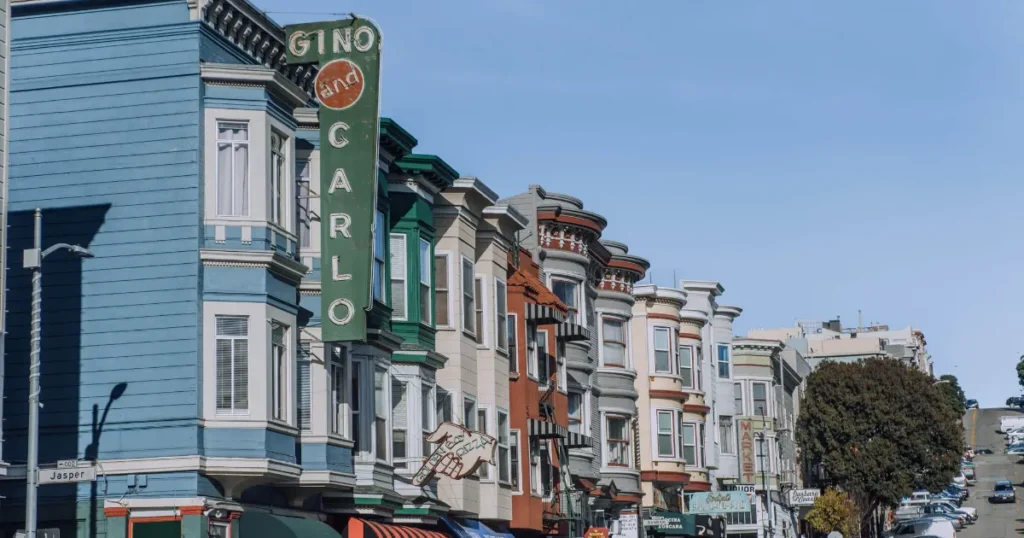
North Beach San Francisco is a lively place to wander without a strict plan. The neighborhood is known for Italian American roots, Beat-era history, bookstores, cafés, and busy sidewalks around Washington Square. San Francisco Travel also highlights the neighborhood’s Italian heritage and Beat history.
A relaxed route can follow Columbus Avenue, pass independent businesses, and continue toward Telegraph Hill. Travelers with extra energy can add Coit Tower to the walk for a higher viewpoint over the city and bay.
North Beach works especially well for visitors looking for scenic walks in San Francisco that mix neighborhood character with classic city landmarks. It also connects naturally with Chinatown, making the two areas easy to explore together.
2. Chinatown: Dense Streets, Food, and Cultural Landmarks
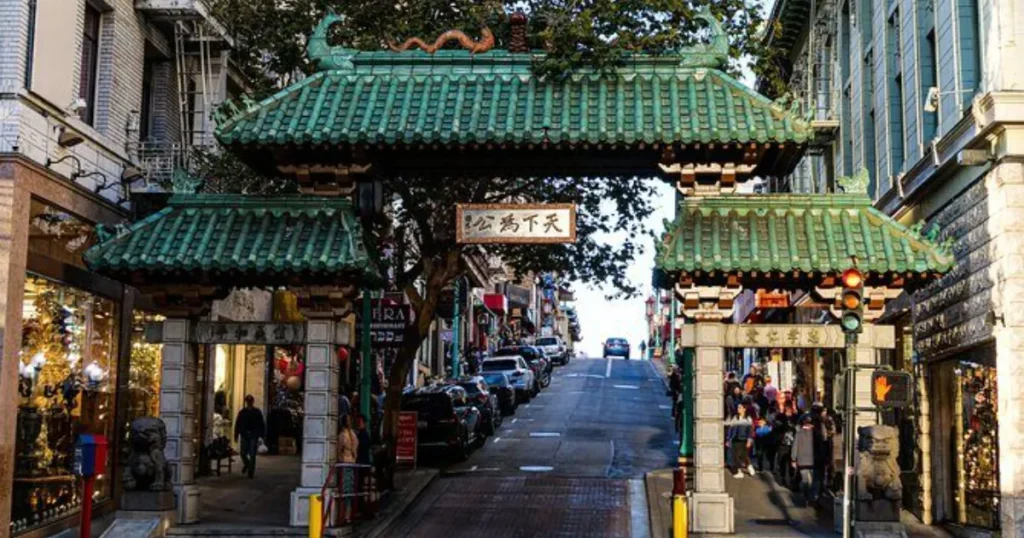
Chinatown San Francisco gives walkers a completely different atmosphere just a few blocks from downtown and North Beach. Lanterns, markets, bakeries, temples, narrow side streets, and ornate details create plenty of reasons to slow down.
A first walk can begin near the Dragon Gate, continue along Grant Avenue, and then shift toward Stockton Street for a more everyday neighborhood feel. Portsmouth Square adds a useful pause between busy streets.
San Francisco Travel describes the neighborhood as North America’s first and largest Chinatown. The area is one of the best areas to walk in San Francisco for travelers who enjoy food, history, and street-level details in a compact space.
3. Mission District: Murals, Food, and Dolores Park
Mission District San Francisco feels energetic, creative, and casual. Valencia Street offers restaurants, bookstores, coffee spots, and small stores, while nearby alleys add some of the city’s best-known street art and murals.
Clarion Alley and Balmy Alley are popular places to see public art, but the neighborhood also rewards unplanned detours. A walk can finish at Dolores Park, where open lawns and skyline views create a comfortable place to rest.
For a longer self guided walking tour San Francisco visitors can follow a route through Mission Dolores, residential streets, and the commercial heart of the district. San Francisco Travel publishes a Mission walking route of about 1.9 miles for its main section, showing how naturally the area fits into a walking day.

4. Haight Ashbury: Music History and Victorian Streets
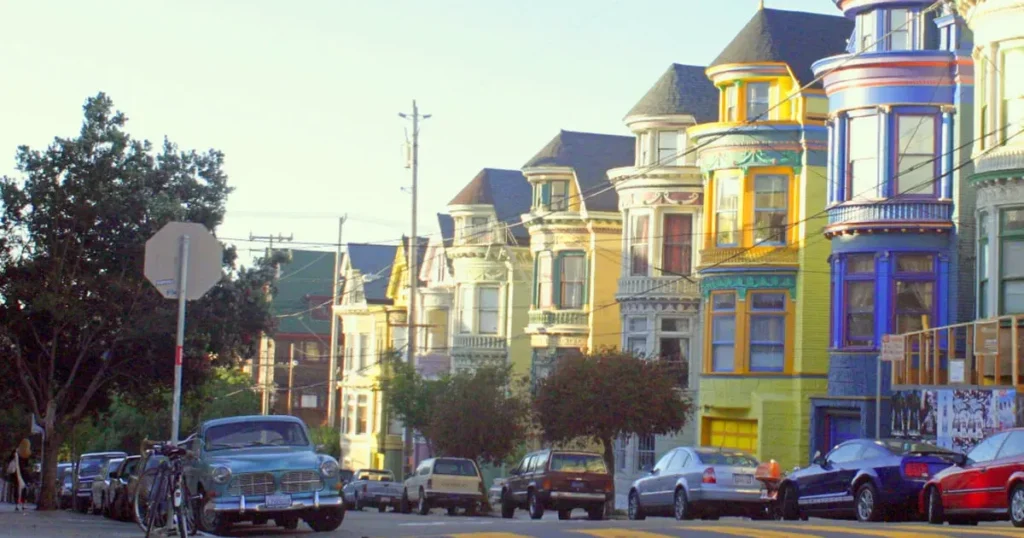
Haight-Ashbury is one of the most recognizable walkable neighborhoods in San Francisco. Its history is closely tied to the 1960s counterculture, but the present-day neighborhood also has vintage stores, record shops, casual food, and colorful street life. San Francisco Travel identifies the famous Haight and Ashbury intersection with the city’s Summer of Love history.
The walk becomes more interesting when travelers leave Haight Street for the surrounding residential blocks. Victorian architecture, painted facades, trees, and quieter corners give the area more texture than its famous intersection alone.
Travelers can continue toward the edge of Golden Gate Park or combine the neighborhood with nearby Buena Vista Park. This is one of the best areas to walk in San Francisco for visitors interested in music history, vintage shopping, and classic homes.
5. The Castro: Local History and Strong Neighborhood Identity
The Castro District is compact enough to explore at an easy pace. Castro Street and the blocks around Market Street bring together historic theaters, neighborhood businesses, cafés, and visible reminders of the district’s importance to LGBTQ+ history.
Residential streets nearby add another side of the area, with hills, gardens, and Victorian architecture. A walker can also head toward Dolores Park, which creates a natural connection between the Castro and the Mission.
For travelers building a San Francisco walking itinerary, pairing these two neighborhoods creates a varied half-day with public art, food stops, local history, and city views.

6. Hayes Valley: A Small Neighborhood Made for Wandering
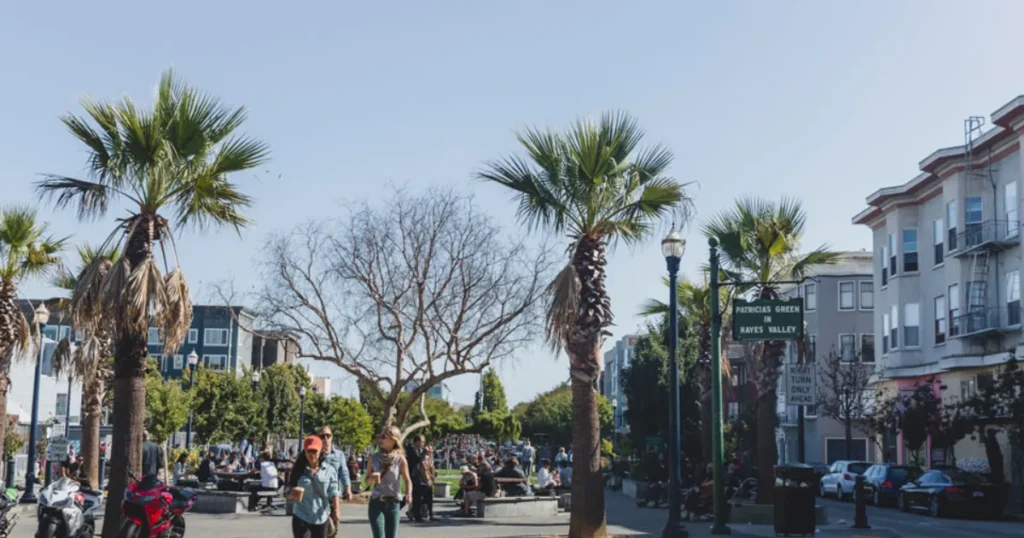
Hayes Valley is one of the easiest San Francisco neighborhoods to explore without covering a huge distance. The central streets are lined with boutiques, design stores, bakeries, restaurants, and local cafes and shops.
Patricia’s Green gives the area an open gathering space, while the surrounding blocks make it easy to browse slowly. The neighborhood’s scale feels manageable, especially for travelers who want a relaxed break between more demanding walks.
Hayes Valley also works well as a starting point before continuing toward Alamo Square or the Lower Haight. It is a useful choice for anyone searching for San Francisco walking neighborhoods with food, shopping, and a neighborhood feel close to the city center.
7. Marina District: Bayfront Paths and Open Views
Marina District San Francisco offers a flatter walking experience than many inland neighborhoods. The Palace of Fine Arts gives the area a dramatic architectural landmark, while nearby paths lead toward the bay. San Francisco Travel also lists the Marina among the city’s flatter, more leisurely areas for walking.
From the Marina, walkers can continue along Crissy Field for waterfront views and open space. On clear days, the route also provides memorable Golden Gate Bridge views without requiring a steep urban climb.
This part of the city is ideal for scenic walks in San Francisco when the goal is fresh air and a slower pace. The combination of the Palace of Fine Arts, lawns, bay scenery, and long paths makes the area feel spacious compared with denser central districts.
8. The Embarcadero: A Simple Waterfront Walk
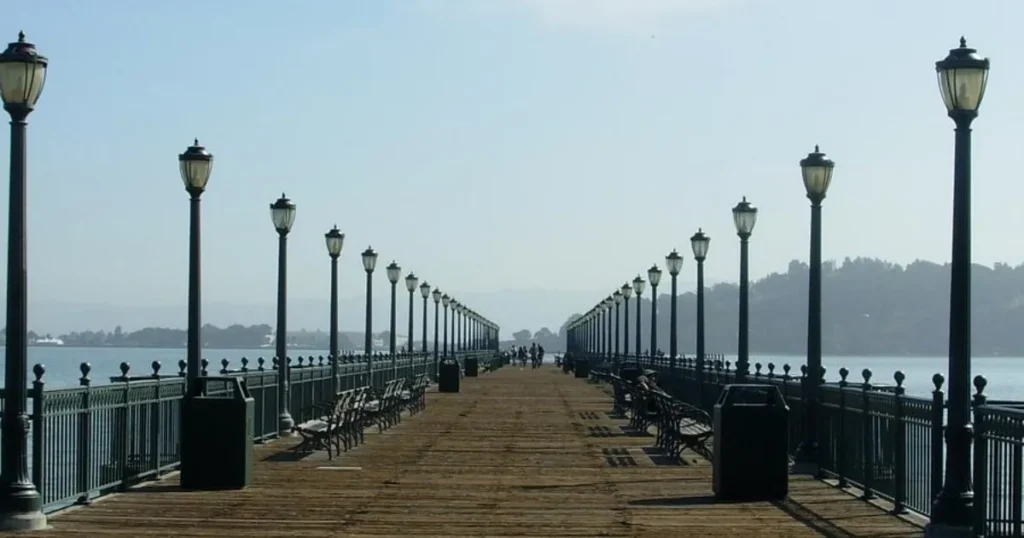
The Embarcadero waterfront is one of the most straightforward places to walk around San Francisco. The route follows the eastern edge of the city, with piers, bay views, public spaces, and easy access to downtown.
The Ferry Building makes a natural starting point. From there, travelers can move north toward the piers or continue toward Fisherman’s Wharf, depending on time and energy.
Because much of the waterfront is flatter than the city’s interior, this route suits visitors who want an easier walk. San Francisco Travel specifically highlights the city’s waterfront as a scenic and largely flat walking option. It is also a practical choice after exploring Chinatown or North Beach, since those neighborhoods can connect downhill toward the bay.
9. Nob Hill: Classic San Francisco With a Climb
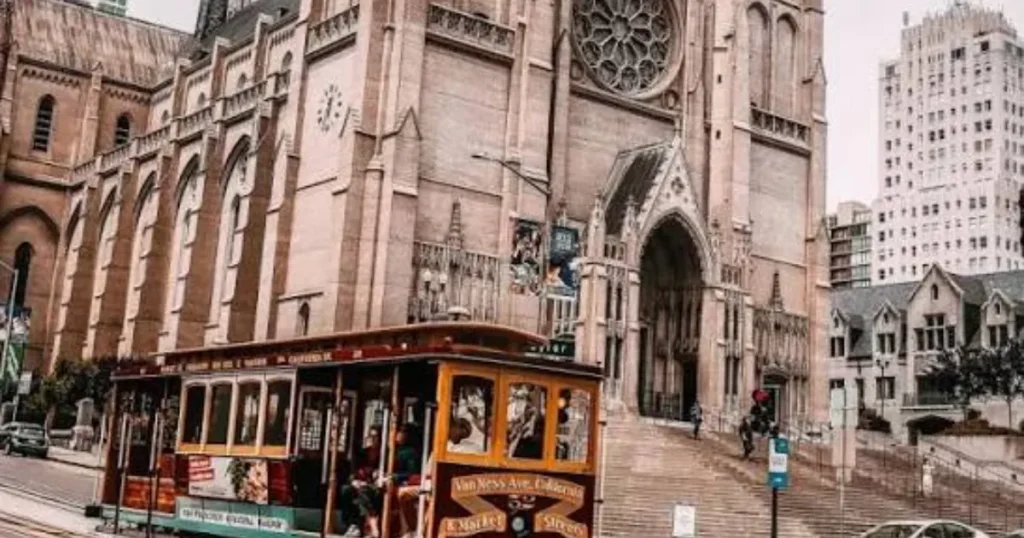
Nob Hill offers a very different walking experience. Historic hotels, cable cars, Grace Cathedral, and elegant buildings give the neighborhood a polished, old-San-Francisco atmosphere.
The trade-off is elevation. The San Francisco hills are part of the scenery here, so this walk works best for travelers comfortable with steeper streets. The reward comes in the changing views and the sense of moving through one of the city’s most recognizable high points.
Nob Hill can be combined with Chinatown for a route that balances a hillier residential area with dense commercial streets. That contrast is one reason the city remains so rewarding to explore San Francisco on foot.
Easy Neighborhood Pairings for a Walking Day
Travelers do not need to cross the entire city to build a good walking day. A few simple combinations keep the route focused while still showing different sides of San Francisco.
Chinatown + North Beach + Embarcadero
This combination moves through culture, food, cafés, and waterfront scenery. It also allows much of the later part of the route to trend downhill toward the bay.
Mission + Castro
This pairing works well for murals, food, local history, and Dolores Park. The neighborhoods sit close enough together to create a satisfying half-day without constant transit.
Hayes Valley + Haight-Ashbury
This route starts with shopping and dining, then shifts toward vintage culture and residential streets. Travelers can shorten the journey by using transit between sections if needed.
Marina + Crissy Field
This is one of the gentler options for visitors who prefer water, open space, and Golden Gate Bridge views. It also keeps steep climbing to a minimum compared with many inland routes.
Practical Tips for Walking San Francisco
A good walking plan leaves room for hills, weather changes, and unexpected stops. Comfortable walking shoes matter because even short distances can include steep grades or uneven sidewalks.
Layers are also useful. Conditions can change from sunny and mild to cool and windy as travelers move between inland streets and the waterfront. A light jacket can make a long walk more comfortable.
Travelers should also avoid packing too many neighborhoods into one day. The best walking experience often comes from choosing two or three areas, stopping for food, and allowing time for small discoveries instead of racing between landmarks.
Anyone planning a first visit can use these neighborhoods as a flexible base for a San Francisco walking itinerary rather than a strict checklist. That approach keeps the day relaxed while still covering many of the city’s strongest walking experiences.
Final Thoughts
The best neighborhoods to explore in San Francisco on foot are not all alike, and that is exactly what makes walking here so enjoyable. North Beach and Chinatown bring dense history and food, the Mission and Castro add art and local identity, Haight-Ashbury brings music history, Hayes Valley offers an easy urban stroll, and the Marina and Embarcadero open the city toward the water.
For travelers comparing walkable neighborhoods in San Francisco, the best choice depends on energy level and interests. A visitor can choose waterfront paths, steep hilltop streets, mural-filled blocks, or café-lined avenues and still experience a strong sense of place.
A well-paced day on foot often becomes more memorable than a long list of attractions. With a simple route, comfortable shoes, and time to wander, San Francisco gives walkers plenty of reasons to keep exploring.