San Francisco fits a huge amount of scenery into a small space. Hills, water, pastel houses and one very famous bridge all sit within a few miles of each other.
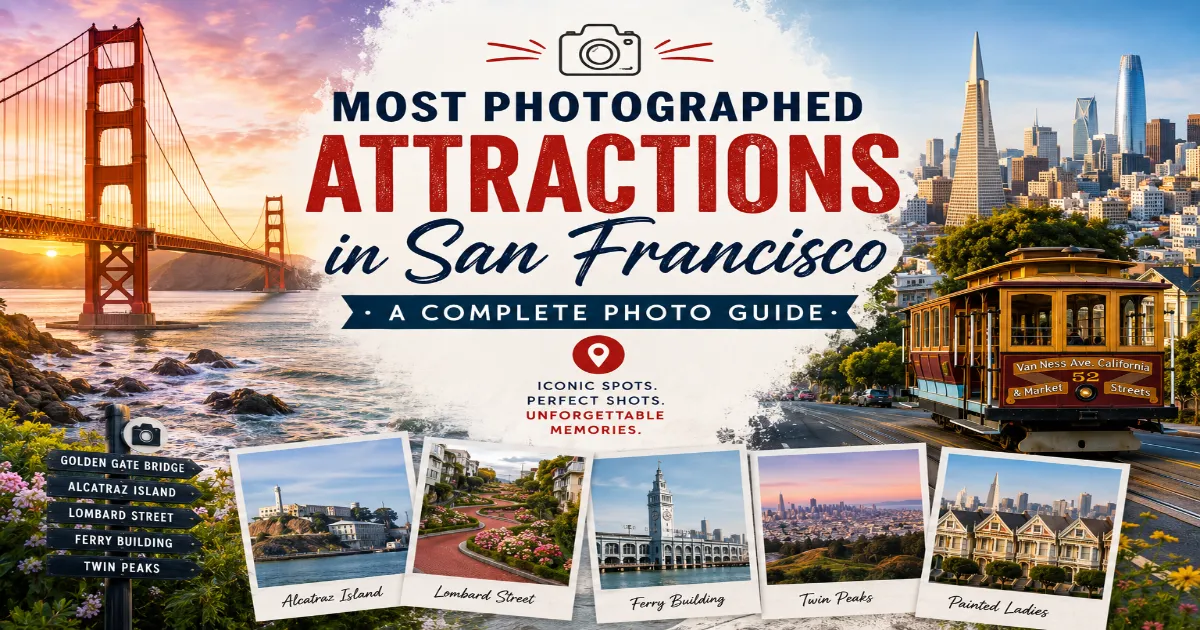
This guide covers the most photographed attractions in San Francisco, the best angle for each one, and the right time of day to shoot it.
Why Photographers Love This City
The city is only about seven miles across, so its iconic landmarks sit close together and several famous shots can be captured before lunch.
- Steep streets create natural scenic viewpoints at the top of ordinary blocks.
- The San Francisco Bay sits on one side and the Pacific on the other, so the light keeps changing.
- The same spot can look completely different an hour later.
The Most Photographed Attractions in San Francisco
1. Golden Gate Bridge
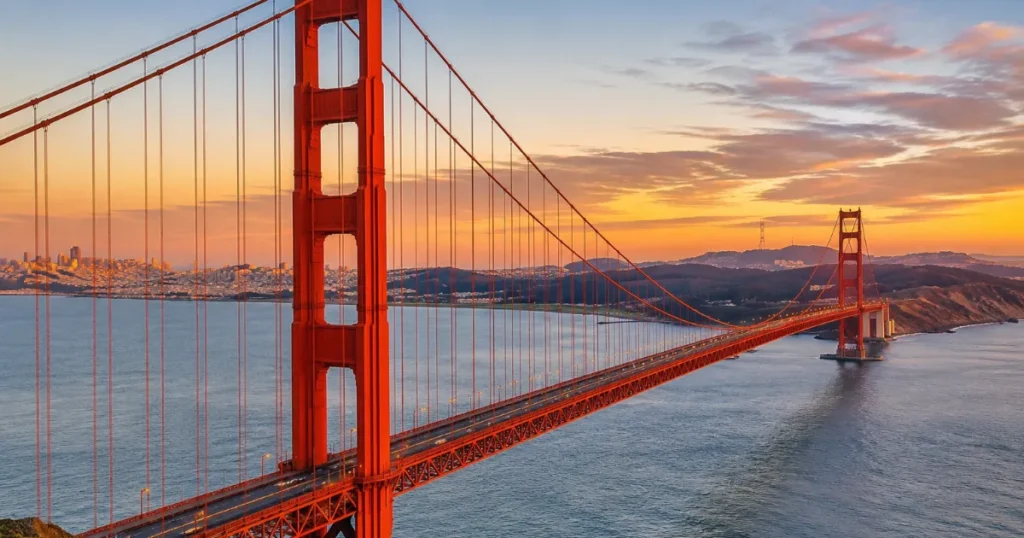
The Golden Gate Bridge is the most recognized structure in the Bay Area, and almost every visitor tries to capture it. The real trick is choosing the right side to shoot from.
- Battery Spencer, Marin Headlands: the classic head-on shot with the city sitting behind the towers.
- Fort Point: directly underneath, good for strong lines and dramatic angles.
- Baker Beach: the postcard version, with sand and surf in the foreground.
- Crissy Field: a flat, calm shoreline shot with easy walking.
- Best time: mornings are clearer, while afternoons often bring fog through the gap.
2. The Painted Ladies at Alamo Square
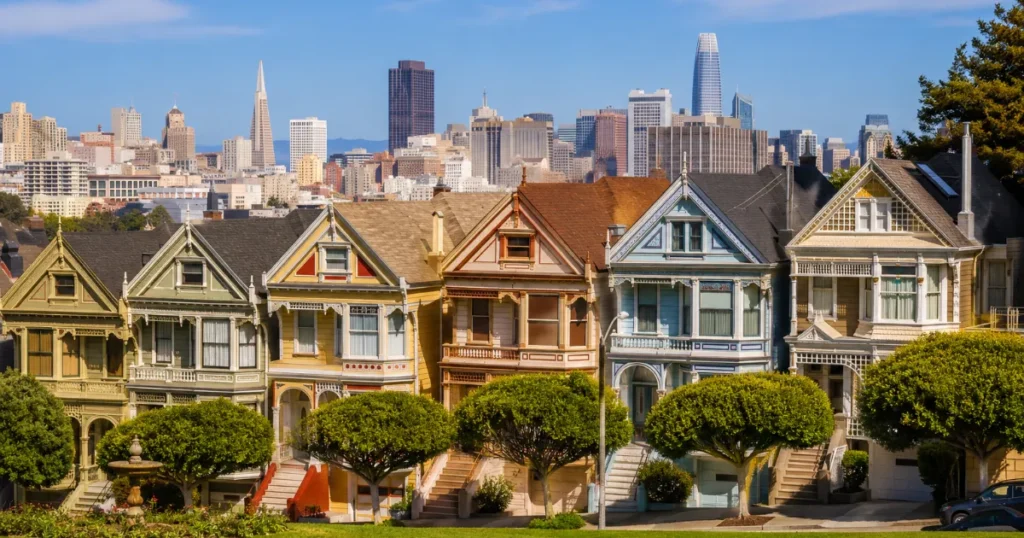
Six pastel Victorian houses stand in a neat row with the glass skyline rising behind them. That contrast is exactly what makes the shot work.
- Where to stand: the small slope inside Alamo Square Park, straight across the street.
- Best time: late afternoon, when the light hits the front of the houses.
- Bonus: the Painted Ladies are free to visit.
3. Lombard Street
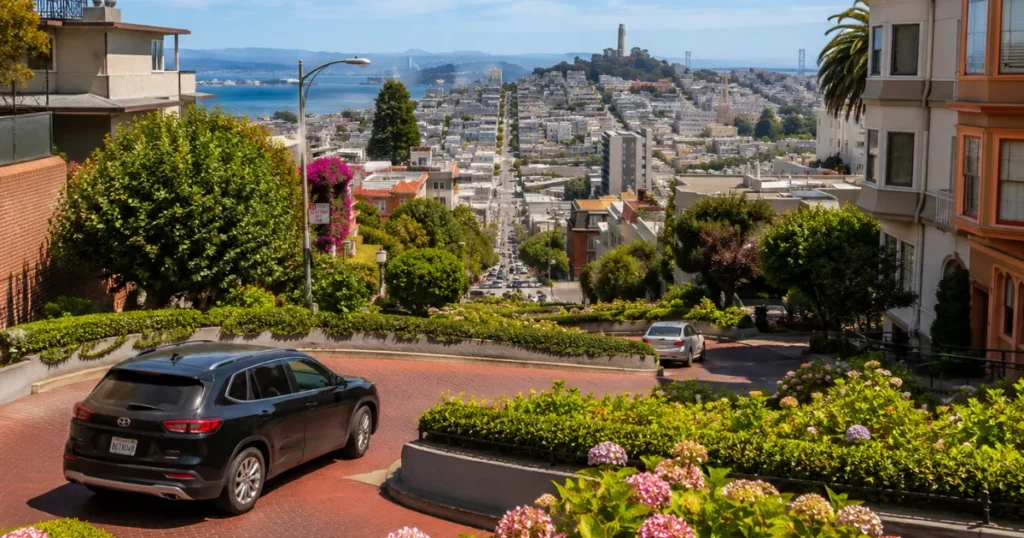
Eight tight turns and neat flower beds run down a steep block of Russian Hill. It photographs very differently from the top and from the bottom.
- Best angle: from the bottom of the hill, which shows the curves clearly.
- Second angle: from the top, leaning more toward the bay view.
- Best time: early morning, before the crowds and the queue of cars build up.
4. Alcatraz Island
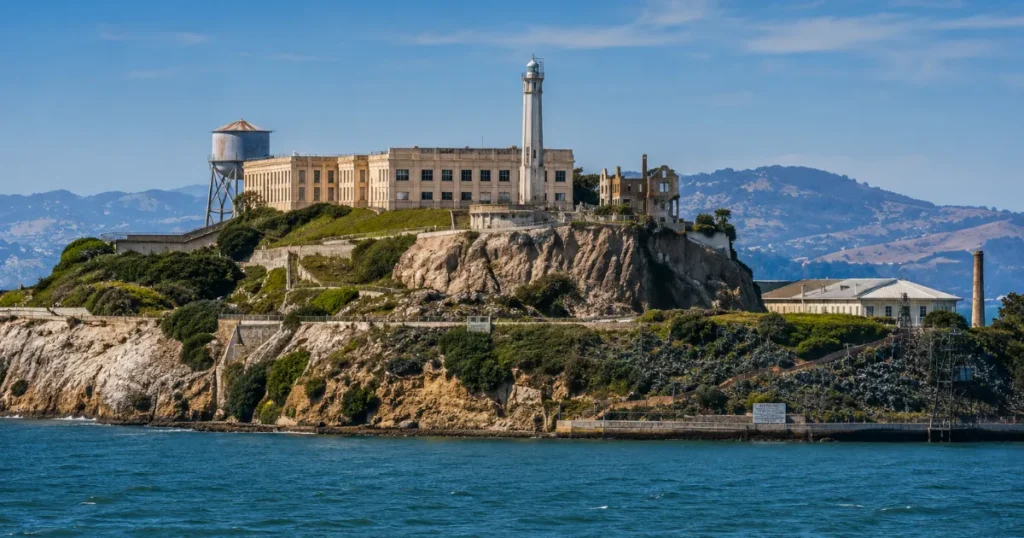
Alcatraz Island reads well from the water and from the shore, and both versions are worth having.
- From the ferry: the approach shot out of Pier 33, with the prison block growing larger.
- From land: still clear along the northern waterfront with a longer lens.
- Tip: tickets sell out well ahead in summer, so booking early matters.
5. Palace of Fine Arts
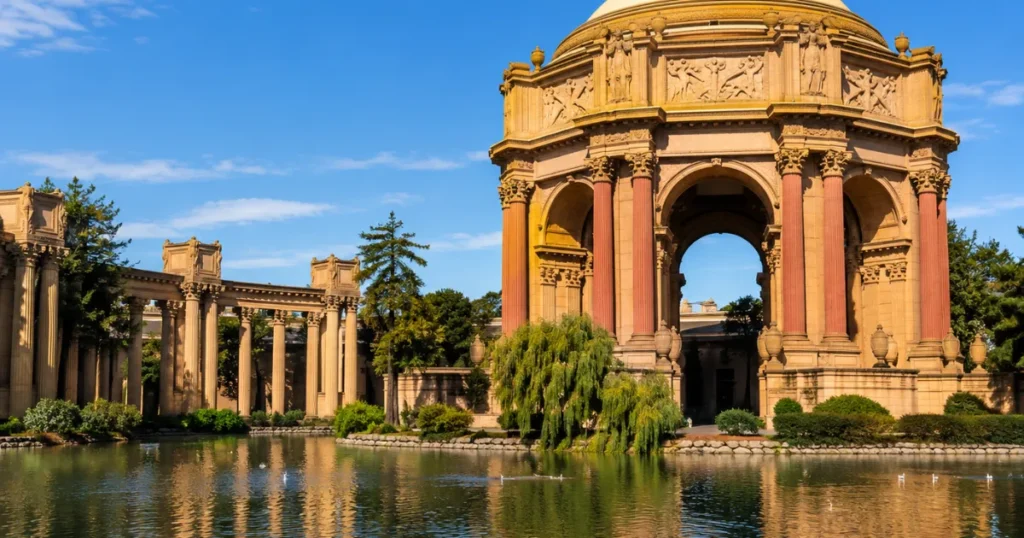
The rotunda and colonnade look more like southern Europe than California. A quiet lagoon sits in front and doubles the whole scene as a reflection.
- Best angle: across the water, using the reflection.
- Best time: weekday mornings, when the water is still and the crowds are thin.
- Note: weekends stay busy with wedding and portrait shoots.
6. San Francisco Cable Cars
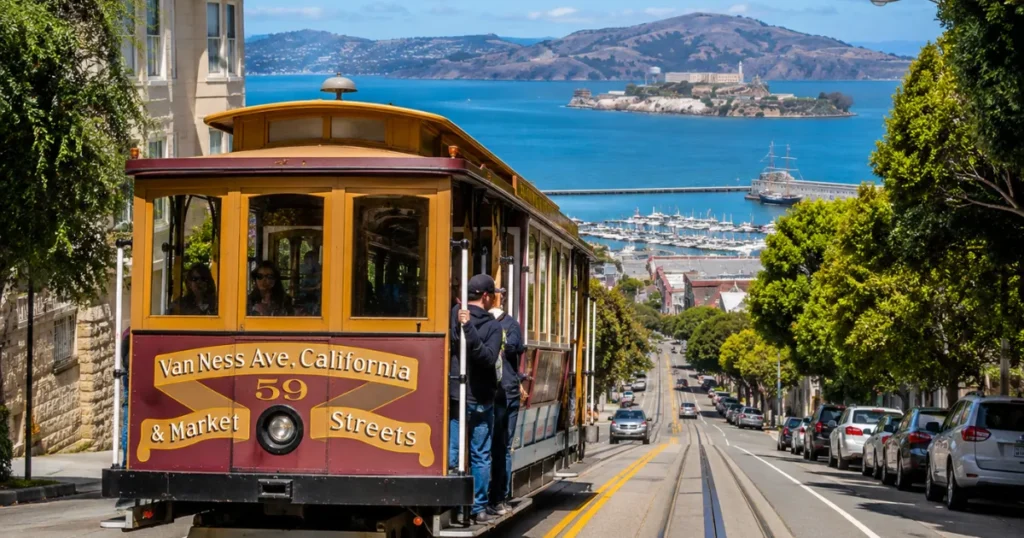
A cable car climbing a hill with the bay behind it is one of the most requested photo opportunities in the city. Getting a clean frame just takes a little patience.
- Best line: Powell-Hyde, especially near the top of Hyde Street.
- Quieter option: the California Street line, with fewer people in the frame.
- Tip: shooting from a street corner usually beats shooting from inside.
7. Coit Tower and Telegraph Hill
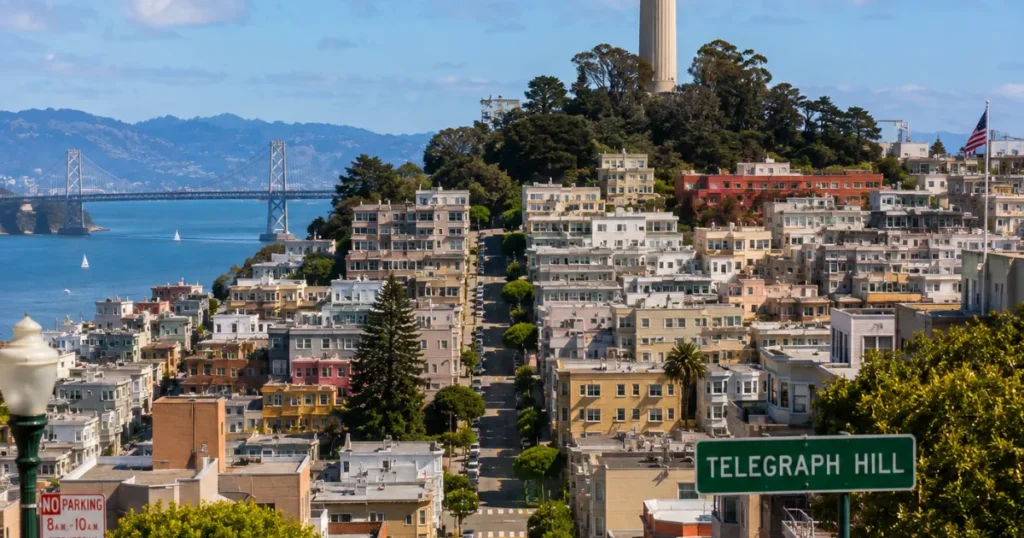
Coit Tower works as both a subject and a lookout. The climb is steep, but the reward is a wide view straight over the rooftops.
- From the base: the tower frames neatly against open sky.
- From the top: rooftops, the Bay Bridge and Alcatraz in one sweep.
- Hidden gem: the Filbert Steps, with gardens, wooden stairs and wild parrots.
8. Fisherman’s Wharf and Pier 39
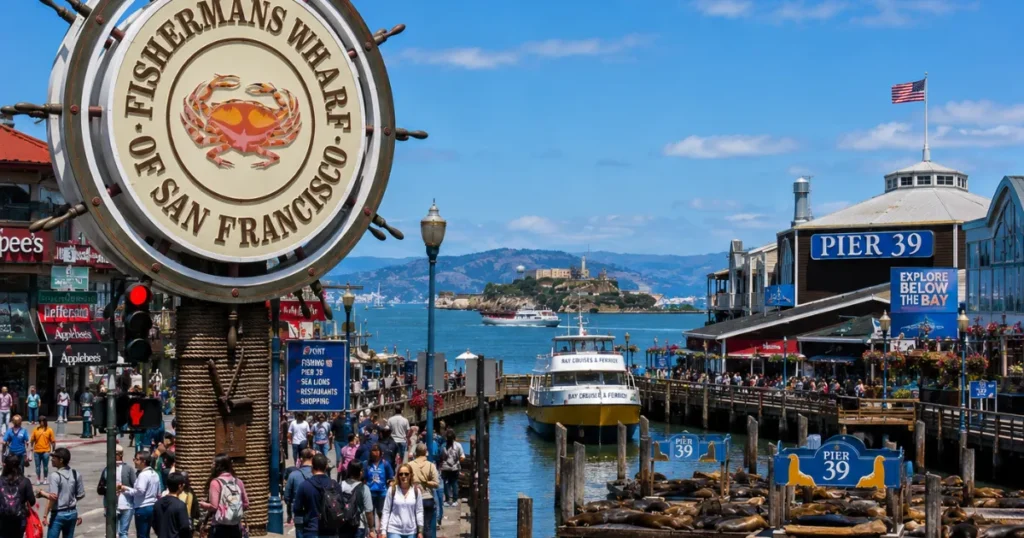
Fisherman’s Wharf is touristy and nobody pretends otherwise, but the boats, weathered signs and stacked crab pots photograph really well.
- Main draw: the sea lions at Pier 39.
- Best time: early morning, when the whole area is quiet and soft.
- Tip: small detail shots often work better than wide shots here.
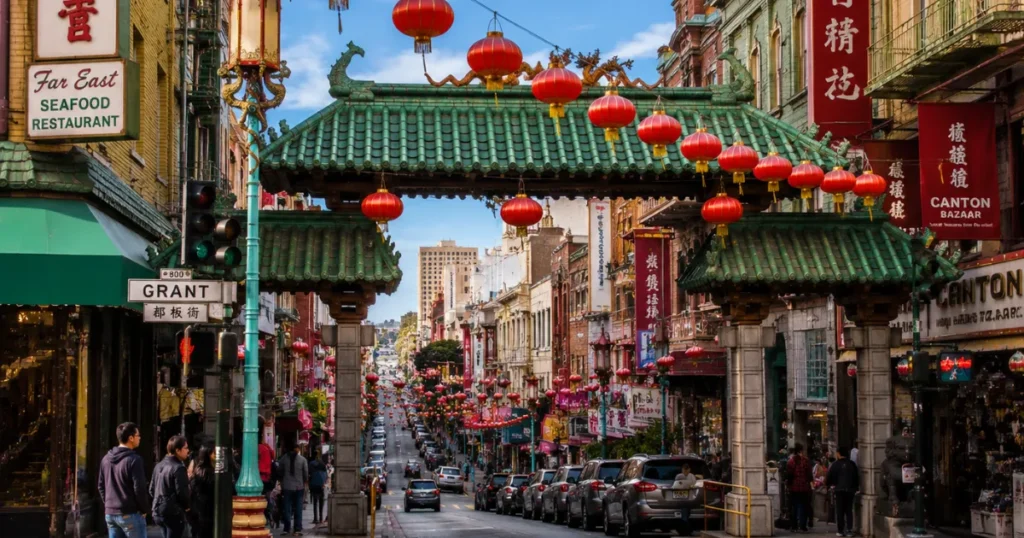
9. Chinatown
This is the oldest Chinatown in North America and one of the best areas in the city for street photography. The side lanes usually beat the main road.
- Main street: Grant Avenue, for lanterns and busy shopfronts.
- Better lanes: Ross Alley and Waverly Place, narrower and older.
- Gear: a smartphone camera is enough here and stays discreet in tight spaces.
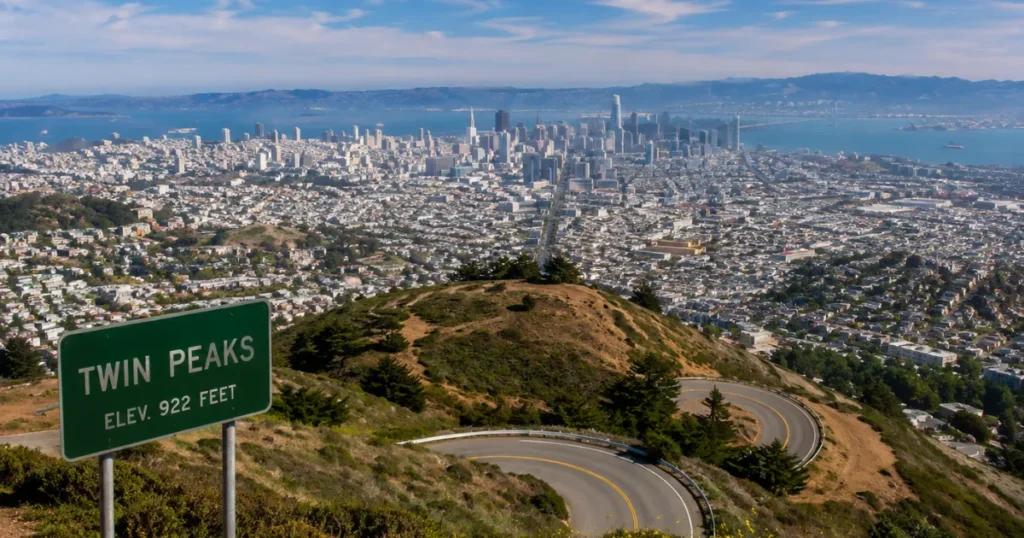
10. Twin Peaks
Twin Peaks delivers the full skyline in a single frame, looking straight down Market Street with the bay and both bridges behind it.
- Best time: sunset and the hour that follows.
- Bring: a tripod and a warm jacket, since the wind up there is serious.
- Tip: arrive early on clear evenings, because the small lot fills up fast.
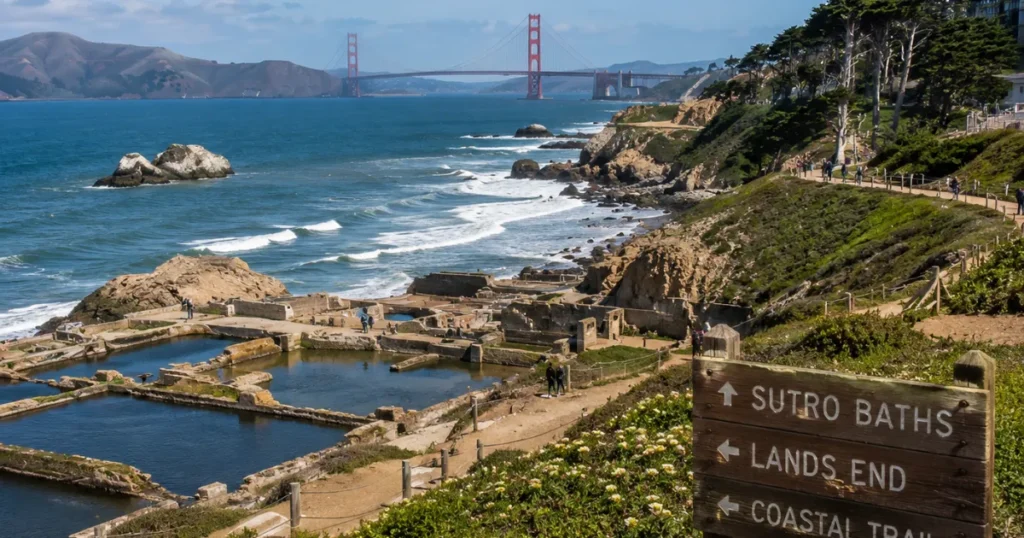
11. Sutro Baths and Lands End
Sutro Baths is the ruin of a Victorian-era swimming complex, now a set of concrete pools open to the ocean. This side of the city feels wilder and moodier than the rest.
- Nearby: the Lands End trail, with cypress trees and sudden openings toward the Golden Gate Bridge.
- Best time: sunset.
- Tip: shoes with grip help, since the paths often stay damp.
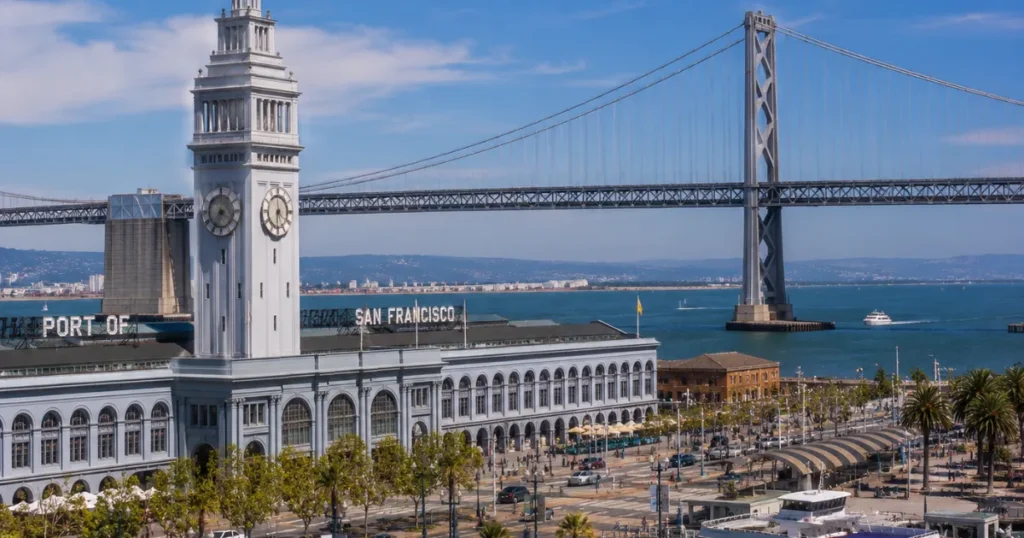
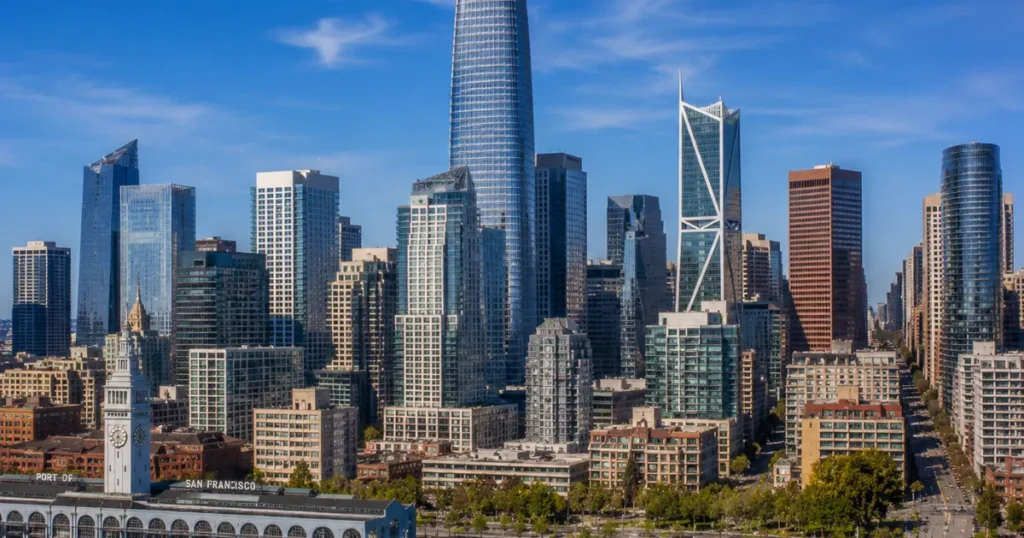
12. The Ferry Building and the Bay Bridge
The Embarcadero waterfront gives clean, modern lines after all those hills and old houses.
- Ferry Building: the clock tower shoots well straight from the street.
- Inside: the market hall is good for food and detail images.
- After dark: the light installation on the Bay Bridge suits long exposures.
13. Salesforce Tower and the Modern Skyline
The tallest building in town has reshaped the skyline, and it now turns up in almost every wide city view.
- Best distance: Treasure Island or the Marin Headlands, where Salesforce Tower anchors the downtown cluster.
- Up close: the rooftop park beside it, for greenery against glass.
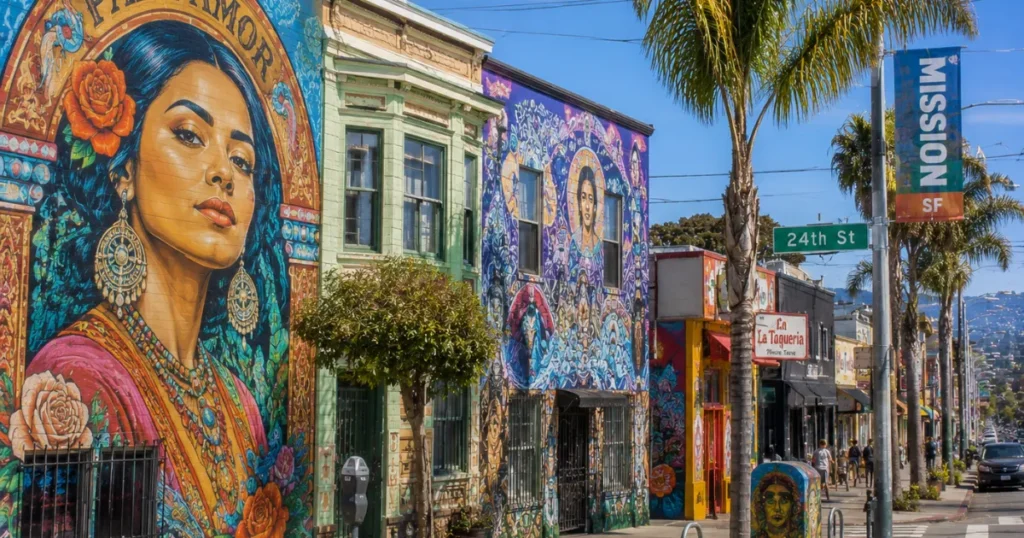
14. Mission District Murals
The Mission District murals are the most colorful backdrops in the city. The artwork also changes over time, so no two visits look the same.
- Where to go: Balmy Alley and Clarion Alley.
- Note: these are among the most popular Instagram spots in San Francisco, and they are free to shoot.
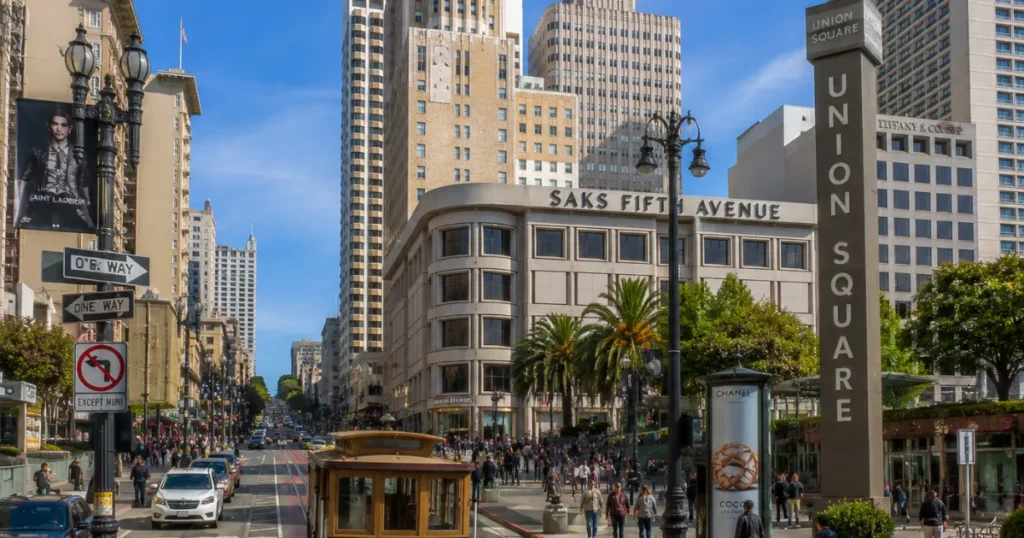
15. Union Square and Downtown Streets
Union Square is a solid base for street work in the middle of the city, especially once the lights come on.
- What to shoot: flower stands, old theater signs and cable car tracks in the road.
- Best time: after dark, for neon and shop windows.
Best Time of Day for San Francisco Photo Spots
Light matters more than location in this city. The same view can look flat at noon and superb two hours later.
- Sunrise: the quietest window of the day, with Lombard Street and the Painted Ladies row almost empty.
- Golden hour: the hour after sunrise and the hour before sunset. West-facing spots like Baker Beach and Lands End glow in the evening, while east-facing views like the Embarcadero look best in the morning.
- Blue hour: the short stretch just after sunset, ideal for city lights against a deep blue sky. Twin Peaks and the Embarcadero both shine then.
Working With the Famous San Francisco Fog
Fog turns up most often between June and August, and it is not a problem at all. A bridge tower half hidden in soft gray often beats a plain blue sky.
- When fog sits thick along the coast, the eastern side of the city is usually clearer.
- Coit Tower and the Embarcadero are the safer picks on those mornings.
- Foggy light is flat, so a small contrast lift while editing helps.
Simple Travel Photography Tips for the City
A few practical habits make a big difference here, and none of them involve expensive gear.
What to Carry
- A wide-angle lens for the Palace of Fine Arts and the narrow Chinatown alleys.
- A light tripod for blue hour and night shots.
- Layers, because a sunny neighborhood can turn cold and windy within minutes.
How to Avoid the Crowds
- Go early, since most famous spots stay quiet before 8 am.
- Visit on weekdays wherever possible.
- The best time to visit for clear skies is early autumn, when September and October bring the sharpest days of the year.
Getting Around and Parking
- Parking near the top attractions is limited, expensive and strictly enforced.
- Public transport reaches nearly every location in this guide.
- Rideshare works better for hilltop spots like Twin Peaks.
A Half-Day Photo Walk
This route links several of the best photography locations without much backtracking.
- Sunrise at Alamo Square for the Painted Ladies.
- Lombard Street while it is still quiet.
- The Powell-Hyde line down toward Fisherman’s Wharf.
- A waterfront stroll to the Ferry Building.
- Finish the photo walk at Twin Peaks for sunset over the skyline.
Good to Know Before Going
- Many of the best San Francisco photo spots are free to visit, including Alamo Square, Lands End and the Presidio.
- Drone use is restricted across most city parks and national park land.
- Valuables should never be left visible in a parked car, since break-ins happen at busy viewpoints.
- Tripod use is limited inside some paid attractions, so it is worth asking at the entrance.
Final Thoughts
The most photographed attractions in San Francisco earn their reputation honestly. They look good because they are good, not because somebody marketed them well.
Timing matters far more than gear. An early start, a little patience with the fog, and a willingness to walk a few extra blocks will beat any expensive lens.